
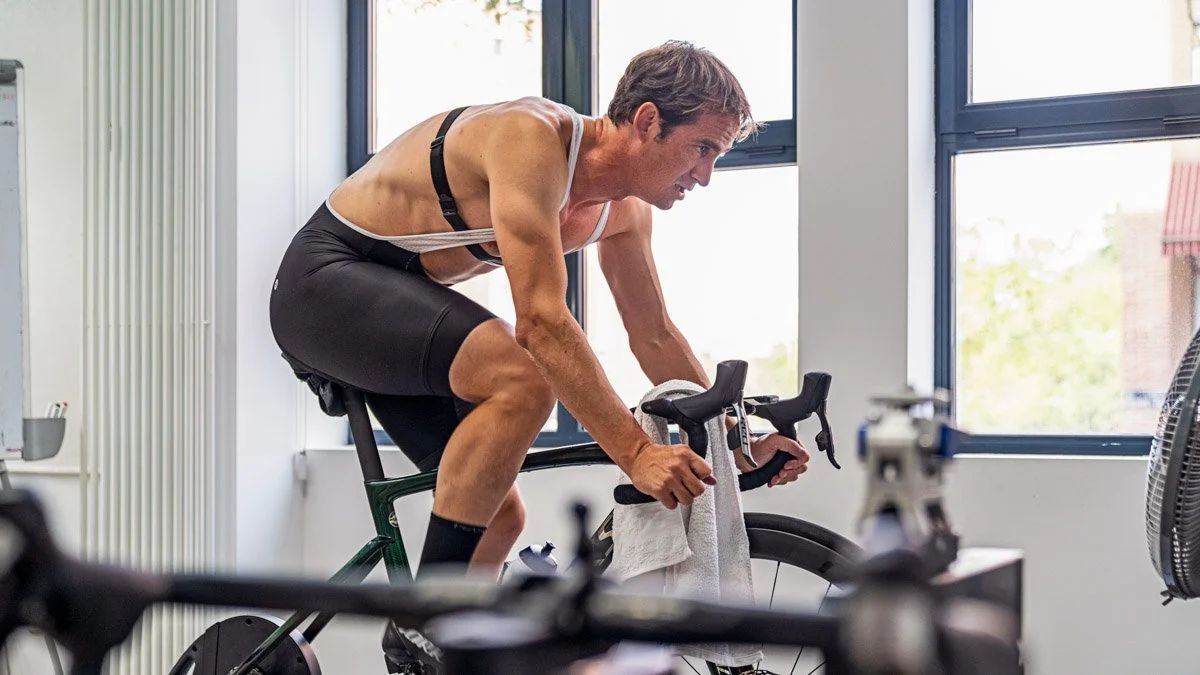
Image from TrainingPeaks.
What if your FTP isn't the thing holding you back?
When I was coaching at Bahrain Victorious and EF, the question was never what a rider could do fresh. Anyone can hit a number in the first hour. The question was what they had left after 3,000 kJ. What their power looked like deep into a race, when the legs were empty and the decisive moves were still to come.
That's durability. And for most amateurs, it's the thing quietly costing them results — not their peak FTP.
Here's the problem: durability is usually trained through volume, and volume is exactly what a time-poor rider doesn't have. If you're getting six hours a week around work and family, you can't ride yourself into fatigue-resistance the way a pro racking up 25-hour weeks does.
But you can train it smarter. Here are four things that work when time is tight.
1. Change how you split the week
Five or six one-hour sessions every week won't build durability. You start every ride fresh, so you never train the thing you're trying to improve — producing power when you're already tired.
Some weeks, split the same hours differently. Two shorter rides and one longer ride. Same six hours on the clock, but now part of that time is spent riding while fatigued. That's the stimulus you're after, and you got it without adding a single extra hour.
2. Move your intervals to the end
Do your hard efforts at the end of the long ride rather than the start.
You'll produce less power than you would fresh — and that's the point. Fresh intervals train your ceiling. Fatigued intervals train your durability. If your target event is decided in the last hour, that's the state you need to have rehearsed. Practising your best efforts only when you're fresh is practising for a race that doesn't exist.
3. Fuel the ride
Durability isn't only a fitness problem. It's a fuelling problem too. A lot of riders fade late simply because they've run out of usable carbohydrate.
Your gut can be trained to absorb more carbs per hour — but it takes weeks of practice, not a single big feed the day before. Start now, on your training rides, rather than in the week before your event. Practise taking on fuel at the rate you'll need on the day, and build the tolerance gradually.
4. Get in the gym
One to two 30-minute sessions a week. Heavy loads, low reps.
Strength work improves your cycling economy: each pedal stroke takes a lower percentage of your maximum force, which delays the point at which fatigue sets in. Over a long, hard day, that adds up.
Yes, you lose an hour of on-bike training to do it. When you've only got six, that's a real trade. But if it's periodised properly, it's worth it — the return on economy outweighs the hour you'd have spent riding easy.
Which one matters most for you?
Not all of this works for everyone. Which of the four matters most depends on where you're actually losing power — and that's different from rider to rider. For one person it's fuelling. For another it's that they've simply never trained tired. Guessing wastes the little time you have.
That's what a full analysis of your data tells you: where you're losing it, and what it'll take to change it. If you want to stop guessing and know exactly which of these four to spend your six hours on, book a performance analysis or get in touch for a free consultation.